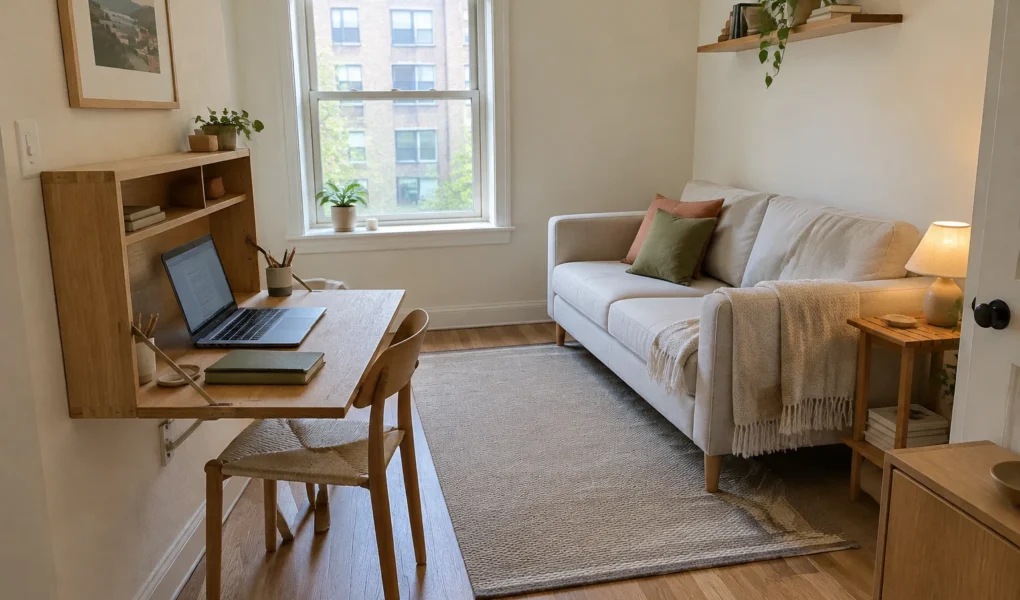
Small spaces ask a lot of a living room: a place to relax, store daily clutter, work, and welcome guests. Furniture placement and useful storage often help more than squeezing in a full matching suite.
These 11 designs pair warm wood, soft textures, and calm neutral colors with choices that keep the room useful. Start with your biggest daily frustration, whether that means a blocked walkway, bulky storage, or nowhere to set up your laptop.
1. A Clear Walkway Beside the Sofa
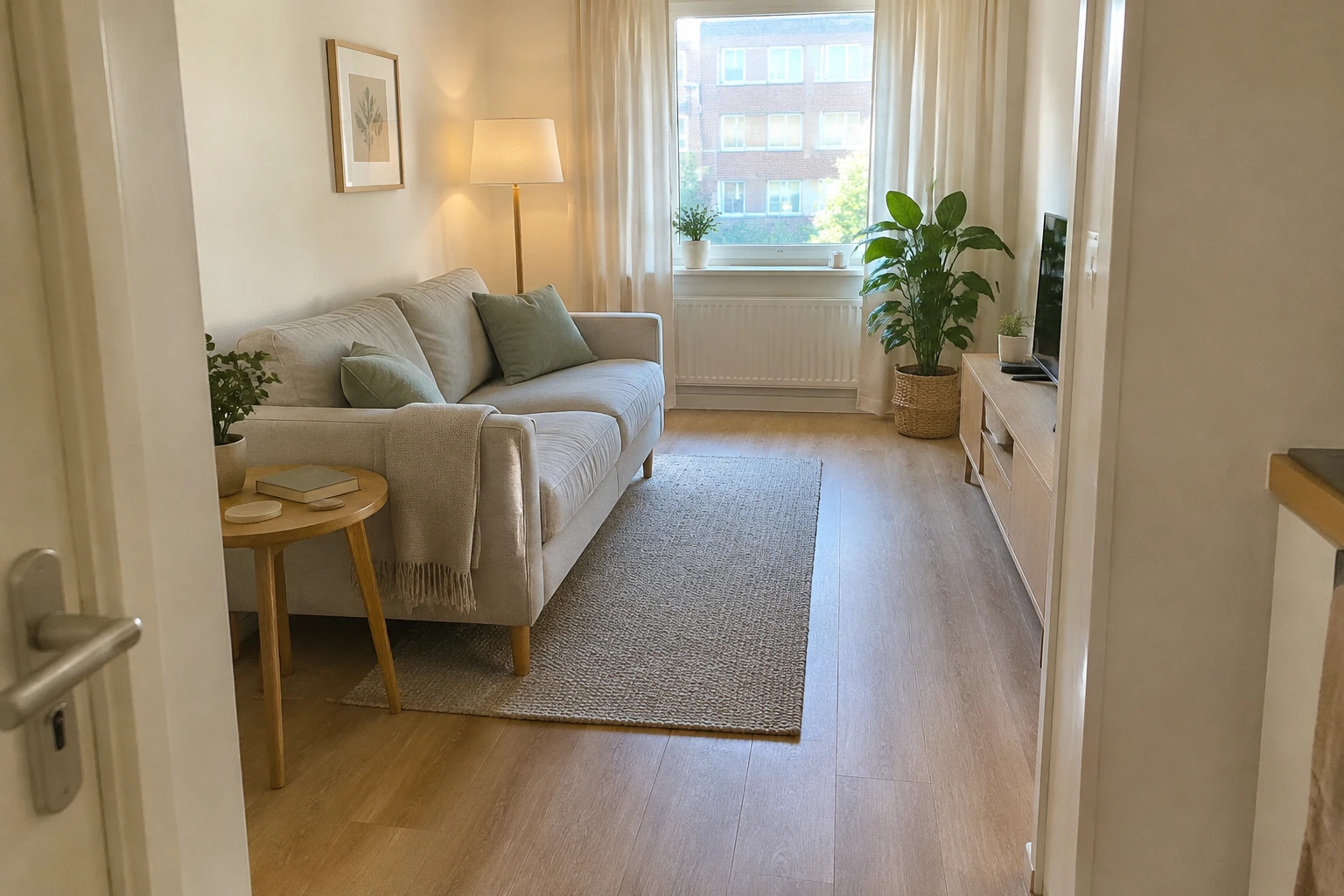
Give the route through your room its own space before adding another seat. In a living room with small spaces to work around, a sofa along one wall can leave a direct path between the doorway and window.
The uncovered strip of wood floor makes this layout work: the textured beige rug defines the seating area without spilling into the passage. The sofa faces the television across the room, so the seating has a clear focal point while the side table keeps a drink within reach.
Copy the layout by measuring the walking route after accounting for both the sofa and media console. Aim for roughly 30 to 36 inches where possible, and choose slimmer sofa arms if bulky ones would squeeze that space.
Add warmth with textured cushions and a throw rather than another piece of furniture. Set a floor lamp beside the sofa, outside the route, for evening reading when the window light fades.
2. A Storage Ottoman at the Center
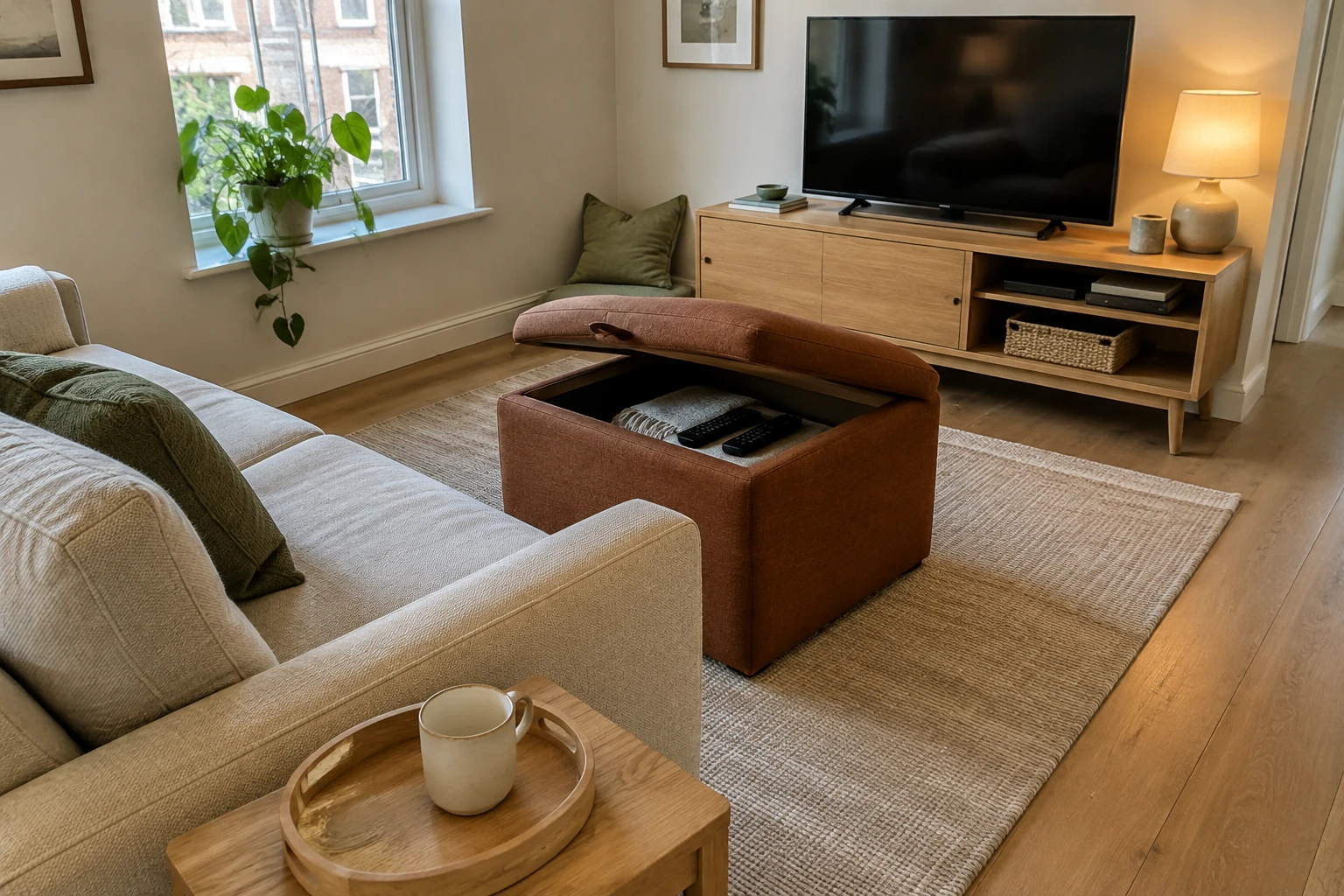
Give the center of your seating area a job beyond holding a coffee table. A storage ottoman offers a footrest, a place for throws and remotes, and a surface for drinks when you add a tray.
The rust-brown upholstery makes this piece the focal point against the oatmeal sofa and pale woven rug. Its soft texture keeps the room comfortable, while the hidden compartment supports organization in small spaces without another cabinet.
To copy the layout, face your sofa toward a low media unit and place the ottoman between them. Leave about 14 to 18 inches between the sofa and ottoman for comfortable reach, and check that you can walk past it with the lid open.
Choose durable woven upholstery and keep your most-used items near the top. Pair window daylight with a warm table lamp on the media unit, and keep a stable removable tray on a nearby side table when you want to put your feet up.
3. Round Nesting Tables Between Close Seats
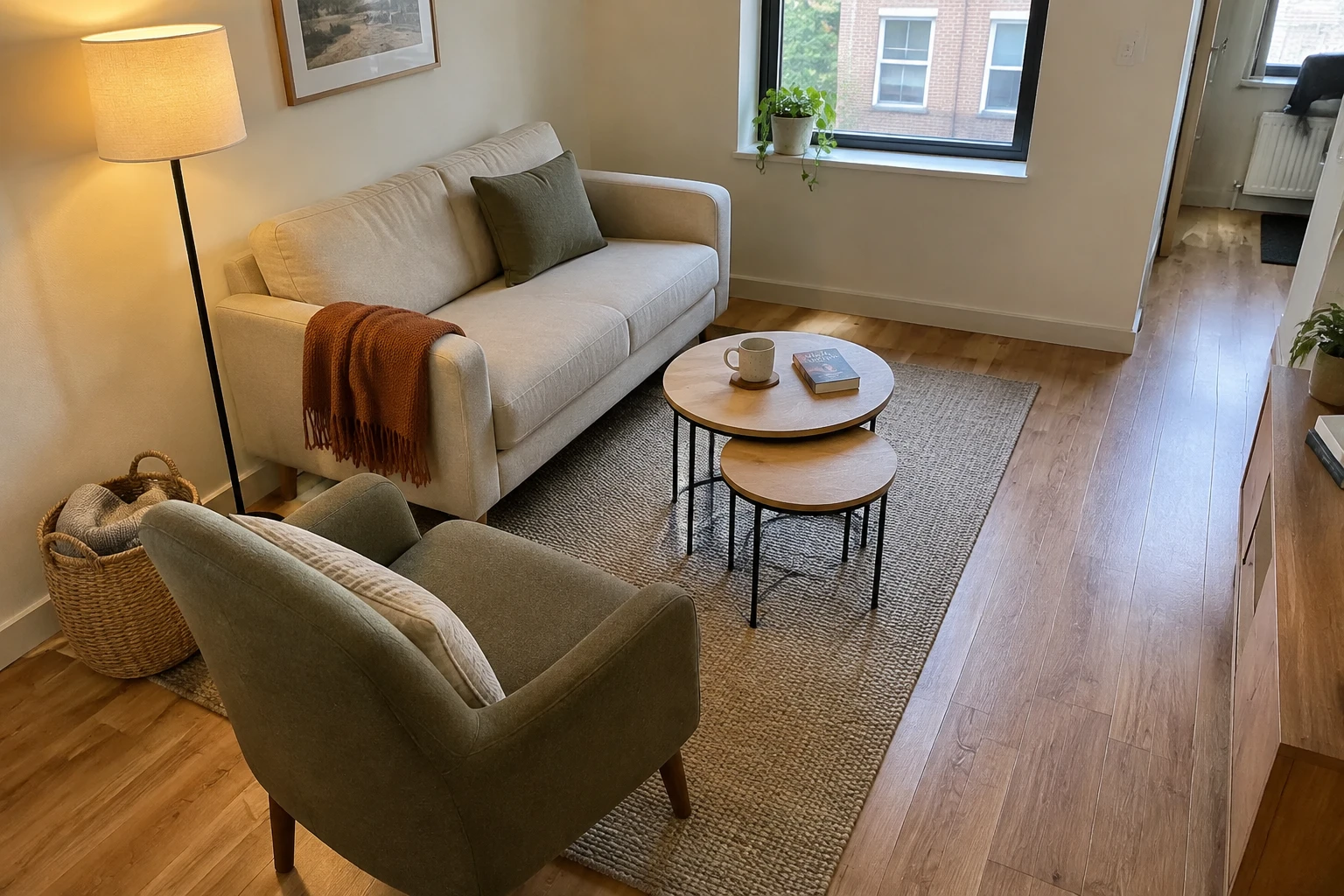
Two drinks need somewhere to land, but a large coffee table can crowd closely spaced seats. Round nesting tables give a sofa and angled armchair separate surfaces that move as your plans change.
The overlapping wood tops create a focal point without forming one solid block between the seats. A textured neutral rug softens the dark table legs, while an olive cushion and rust throw add warmth to the oatmeal sofa. Among furniture ideas for small spaces, this arrangement works well when the same floor area hosts conversation, reading, and stretching.
To copy it, angle your chair toward the sofa and place the larger table within reach of both seats. Check the route past the chair with the smaller table pulled out, not only tucked away.
Keep a floor lamp beside the sofa for evening reading, alongside daytime window light. Pull the smaller table toward the chair for a mug, then nest it again when you need the floor.
4. A Floating Sofa Defines the Lounge
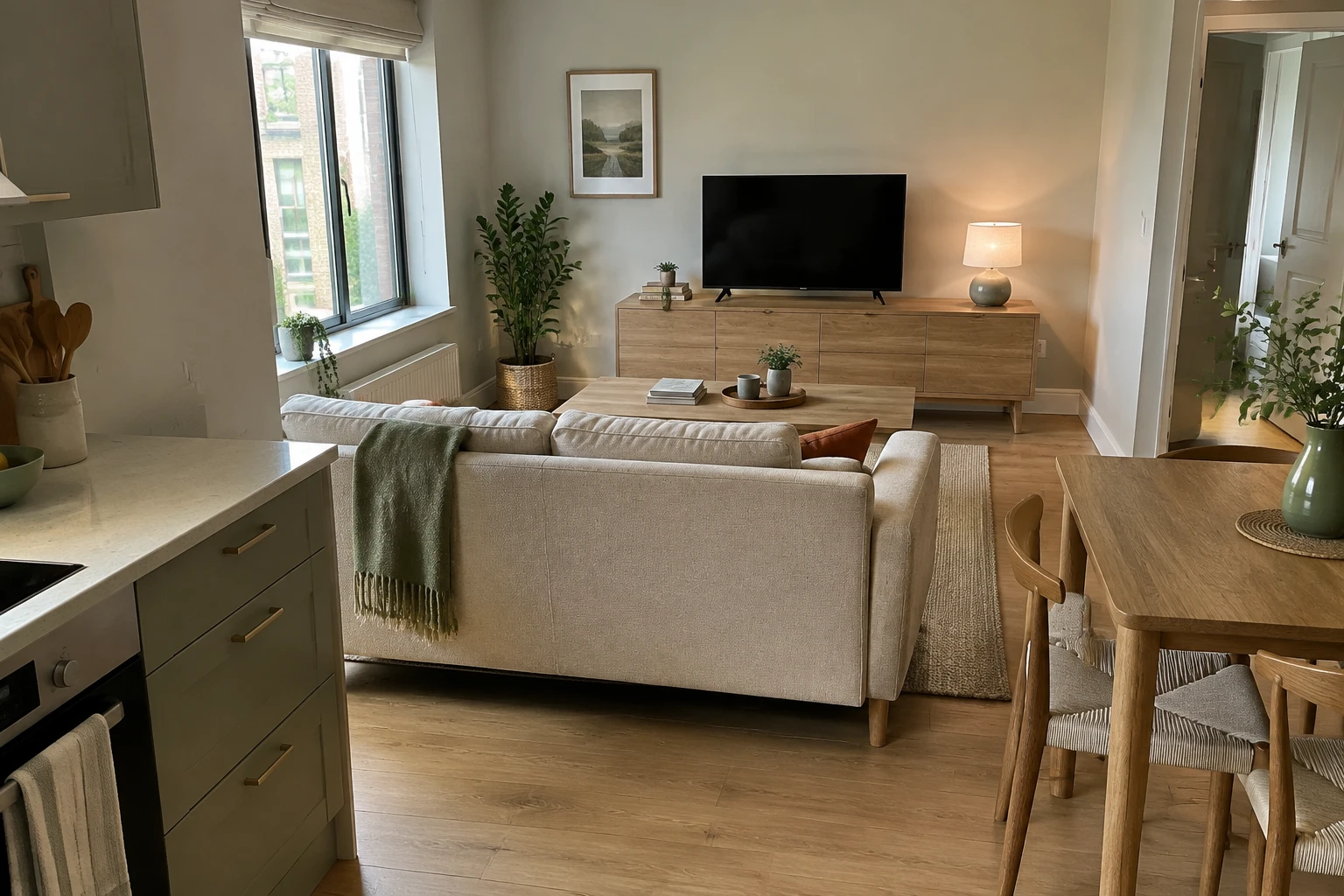
Give the lounge a boundary by turning the sofa’s back toward the kitchen or dining area. The seat faces the media wall, so the furniture separates cooking and relaxing without closing off either space.
This approach suits small open-plan living room designs because the sofa does two jobs: seating and zoning. A textured neutral rug anchors the lounge, while the low wood console gives the seats a clear focal point and keeps everyday clutter behind closed drawers.
To copy the layout, test the sofa position before moving everything else. Measure the route beside and behind it, then check that people can pass while someone uses the dining chairs.
- Tuck the rug under the sofa’s front legs to mark the seating zone.
- Repeat muted green in a cushion and throw to connect the soft textures.
- Put a table lamp on the media console for warm evening light without adding another piece beside the sofa.
Leave the sofa back bare unless a console table still allows comfortable daily passage.
5. A Floating Media Unit Frees the Floor
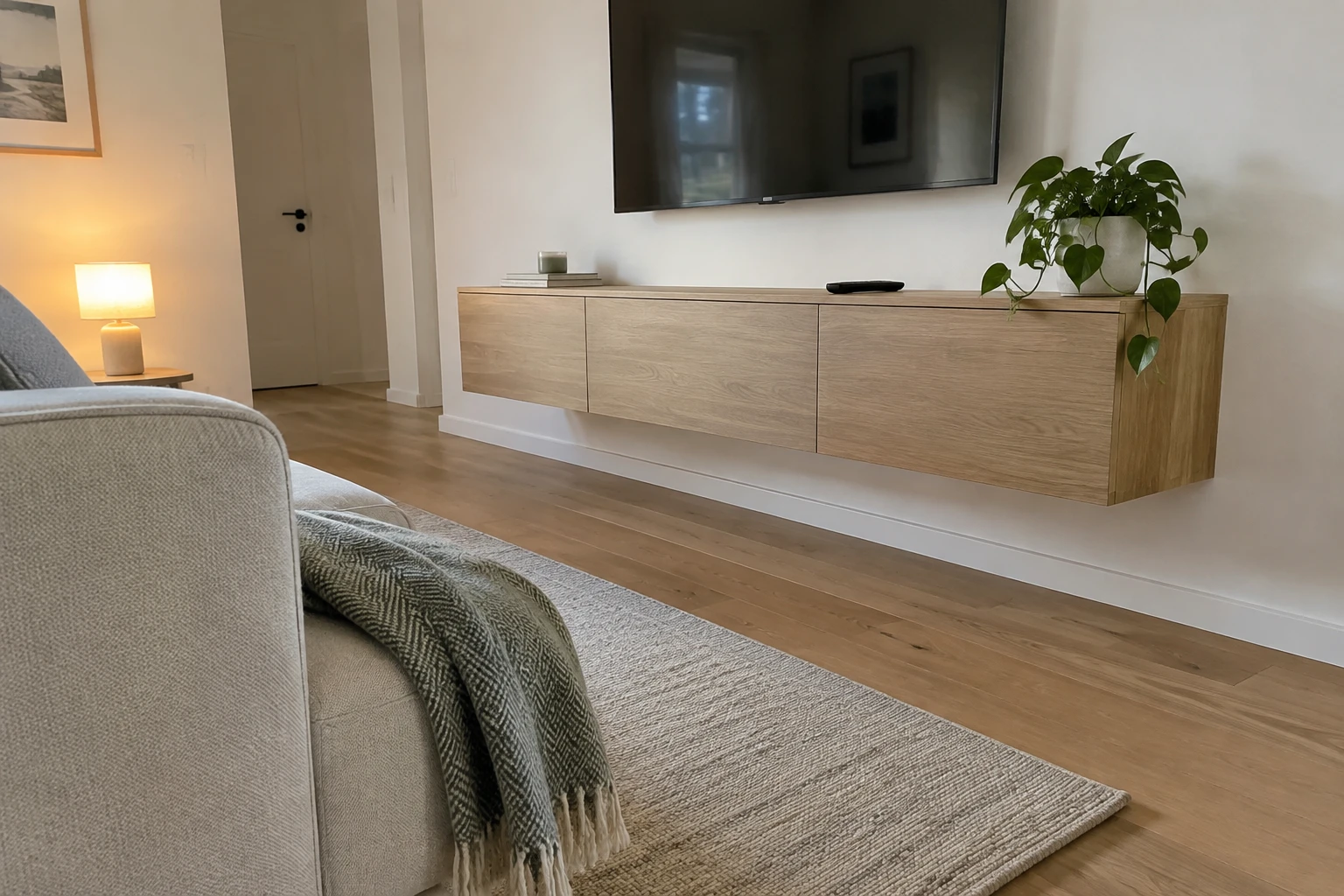
Lift the media cabinet off the floor so you can sweep beneath it without moving furniture. The visible gap under this pale-wood unit keeps the TV wall from feeling like a solid block of storage.
Among storage ideas for small spaces, a wall-mounted cabinet works well when you need a place for remotes and electronics. Closed doors reduce visual clutter, while warm wood fronts give the screen a softer backdrop.
Face a compact sofa toward the TV and choose a cabinet shallow enough to leave a comfortable walking route. Set the screen height for seated viewing, then add a woven rug and a textured throw to soften the seating area.
A diffused table lamp beside the sofa adds evening light and softens the contrast around the screen. Before mounting the cabinet, check that the wall structure and fixings can support it; allow ventilation for electronics and use a suitable cover for exposed cables.
6. A Window Bench Replaces the Armchair
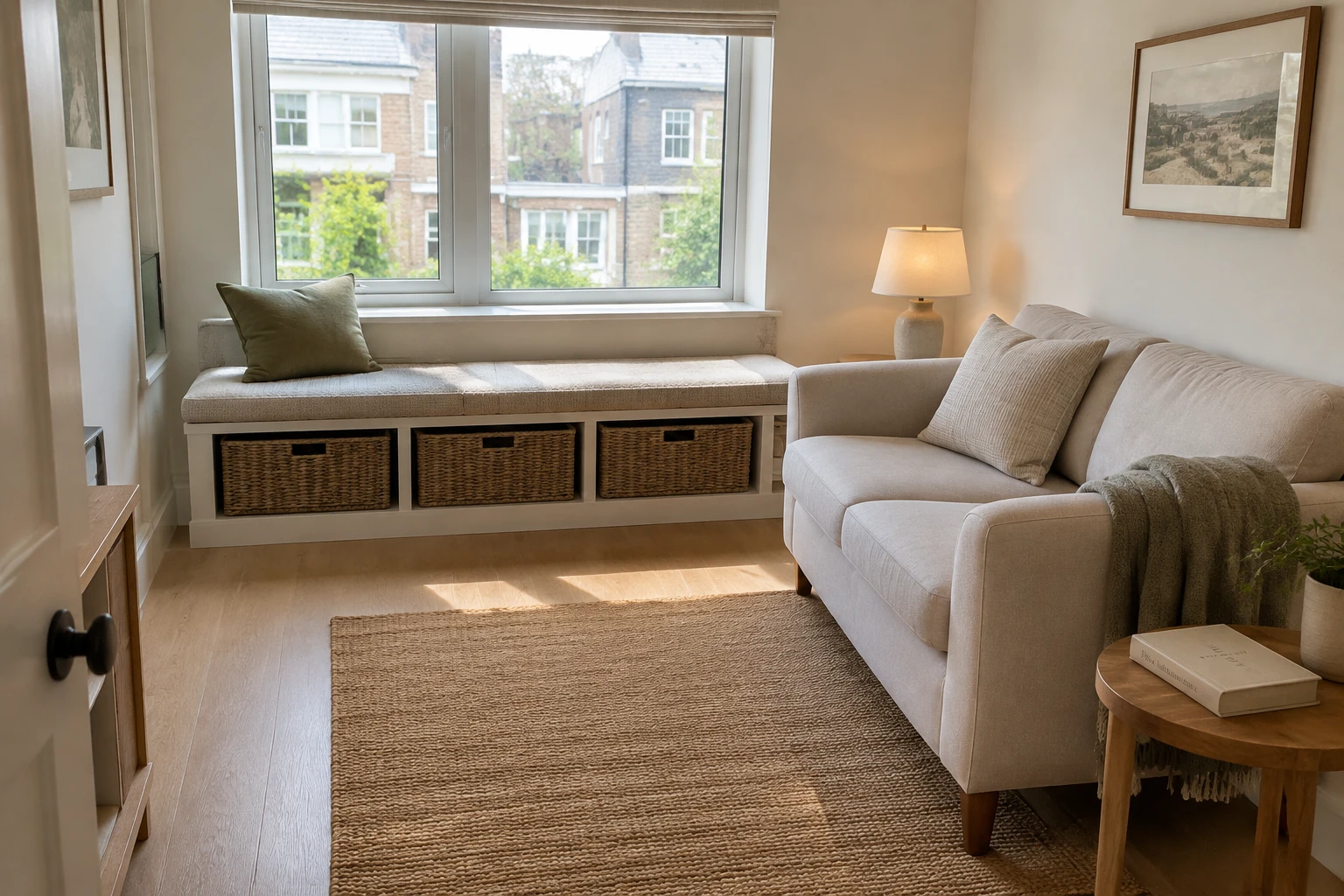
An unused window edge can become a second seat instead of a spot to squeeze in an armchair. Pair a cushioned window bench with the sofa in an L-shaped arrangement so guests can sit together without filling the center of the room.
The window gives the seating area a clear focal point, while the bench’s low shape keeps the view open. A pale cushion, olive pillow, and woven baskets add texture without busy patterns. This is one of those cozy ideas for a small living room that gives an overlooked edge a daily job.
Copy the layout with a freestanding, seat-rated bench if built-ins are beyond your budget. Check its depth against your walking route before buying, and keep radiators, vents, opening windows, and required exits clear.
Use a fitted cushion and washable back pillows for comfort. Daylight supports reading; add a small lamp nearby for evenings, and store loose throws in baskets underneath so the seat stays ready for guests.
7. Swing Arm Sconces Frame the Sofa
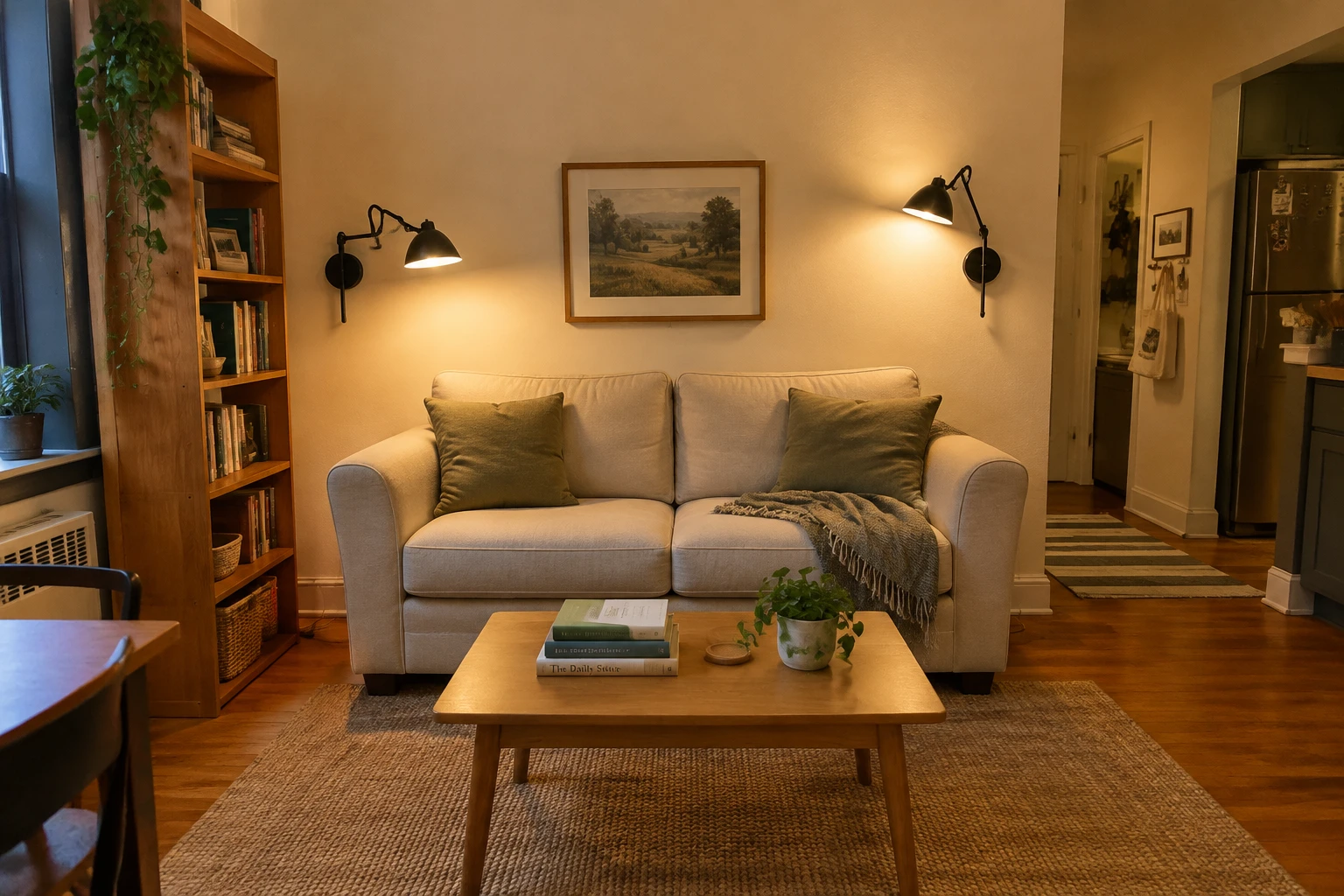
The space beside a loveseat can feel crowded once you add floor lamps. Wall-mounted swing-arm sconces move reading light off the floor and keep that space available for a drink table or access to the seat.
Here, two black sconces frame a landscape print above the oatmeal sofa, giving the seating area a clear focal point. Warm light, olive cushions, and a textured throw soften the balanced arrangement so it feels comfortable for everyday lounging.
Among small living room lighting ideas, this one lets you adjust the light without moving furniture. Keep the loveseat against the wall, then choose shaded fixtures with warm bulbs and switches you can reach while seated.
- Test each arm’s reach before mounting so the shade can light a book without becoming a head-height obstacle.
- Use plug-in fixtures if wiring is not an option, and secure cords neatly along the wall.
- Add slim drink tables only where they fit without crowding the sofa ends.
8. A Tonal Wall Softens Bulky Storage
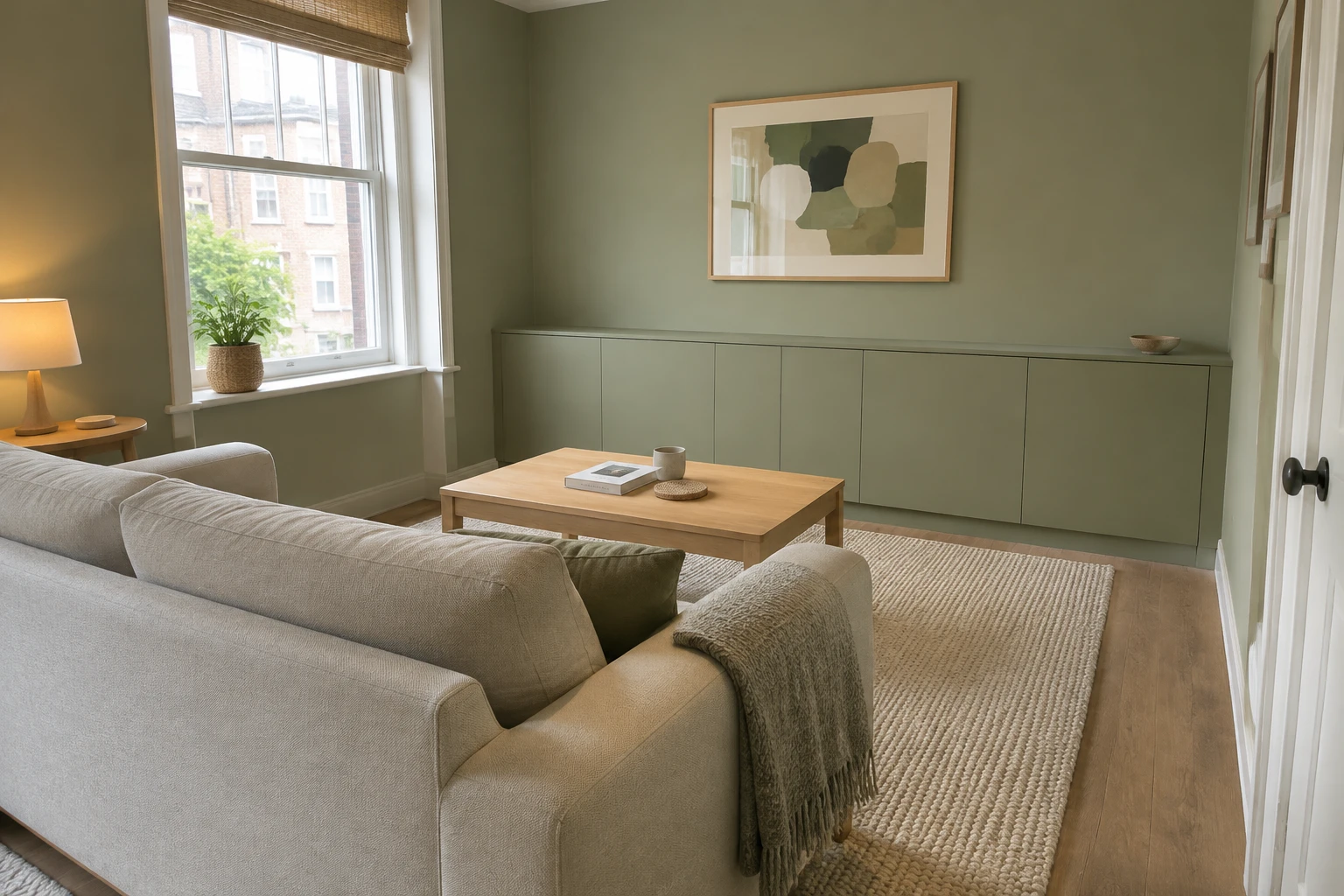
A long cabinet draws less attention when its paint closely matches the wall behind it. Here, muted sage softens the broad storage fronts, while one framed abstract print gives the eye a clear place to settle.
This approach to decorating small spaces keeps useful storage without adding strong blocks of contrast. The cream woven rug and textured throw add warmth, so the quiet palette still feels comfortable rather than bare.
Copy the idea with a wall-matched closed cabinet across from the sofa, with a coffee table between them. Check that cabinet doors can open fully, and leave enough space beside the seating to pass while someone relaxes.
Use paint suited to each surface, matching the color rather than assuming one paint works everywhere. Store games, cables, and other daily clutter behind the doors, and keep the top mostly clear.
Place a shaded lamp beside the sofa to supplement window light for evening reading. Choose one artwork above the cabinet instead of filling its top with ornaments.
9. A Fold-Down Desk Beside the Sofa
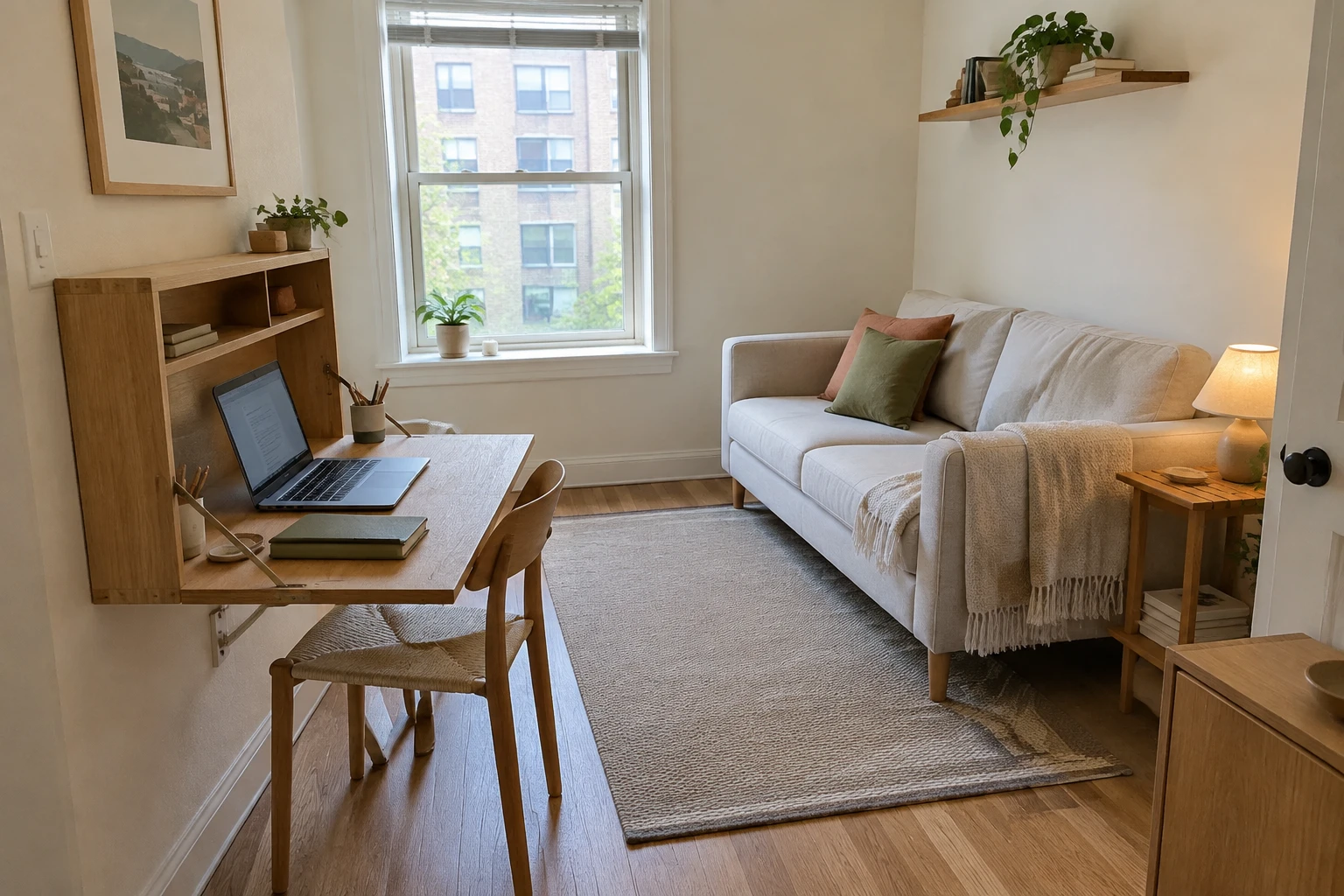
Laptop work can borrow a wall without taking over the lounge. A fold-down desk gives you a work surface for short sessions, then closes when the day is done.
Among living room workspace ideas, this layout keeps work at the edge rather than in the center. The oak desk and woven rug connect the work area to the sofa, while a textured throw softens the wood-heavy corner. Window light helps during the day; the sofa-side lamp keeps evening seating comfortable.
Keep the sofa facing your main artwork or television, with the desk on a nearby wall so it stays outside that sightline. Copy the arrangement with these checks:
- Measure clearance with the desktop open and the chair pulled out, not just tucked in.
- Choose a desk rated for your equipment and secure it to suitable wall structure.
- Add a compact task light and closed supply box, then clear the surface, fold it up, and return the chair after work.
10. A Mirror Reflects the Window Light
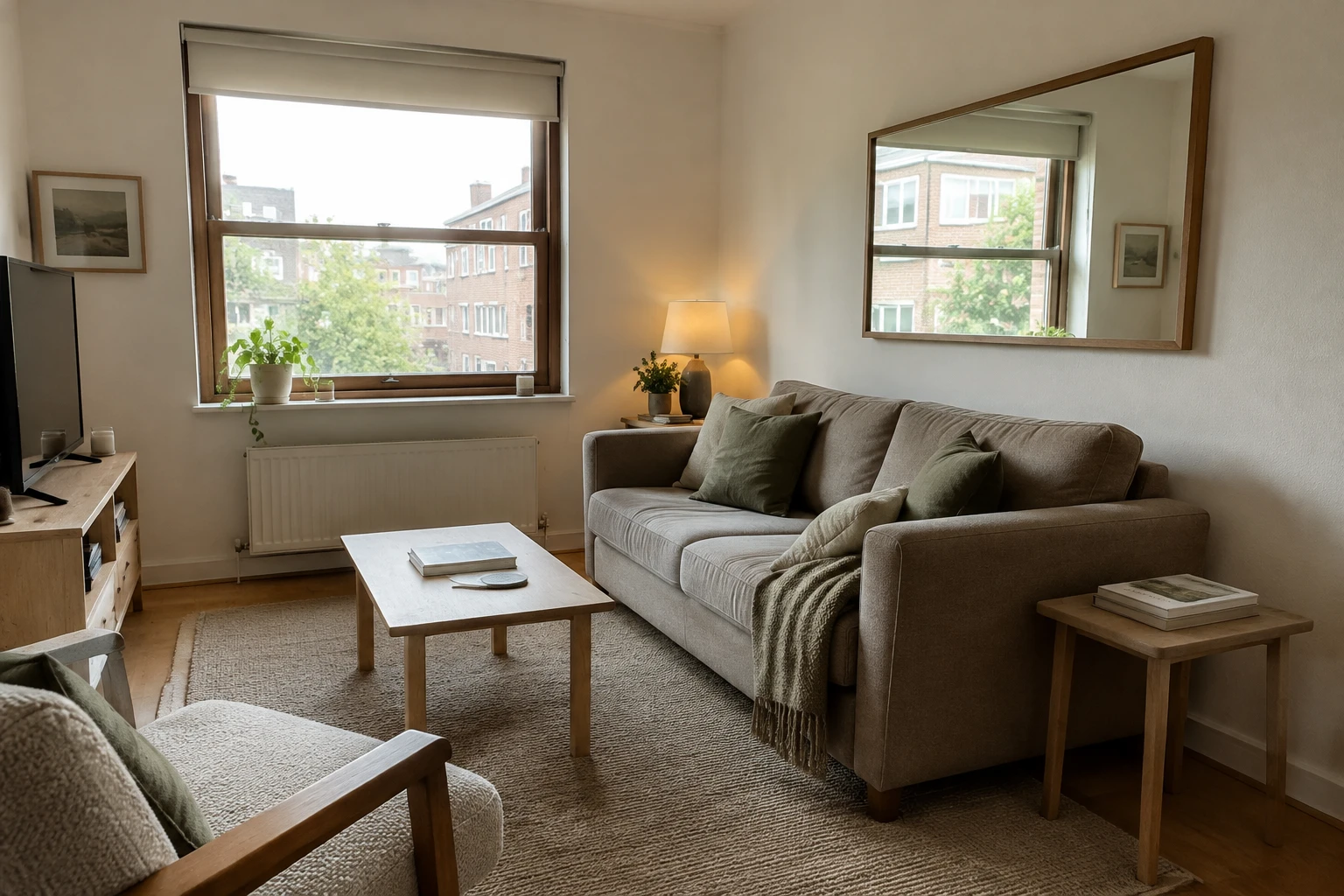
A window can brighten more than one wall when a wood-framed mirror catches its light. Above this taupe sofa, the large mirror reflects the window and creates a bright focal point without taking up floor space.
Among wall decor ideas for a small living room, this works well when a corner feels dim. The woven rug and textured throw soften the reflective glass, while the wood frame ties in with the tables.
Before drilling, check the reflection from both the sofa and the doorway. Aim for the window or a pleasant view rather than television glare, then secure the mirror with hardware suited to its weight and your wall type.
Keep the sofa and one chair grouped around a coffee table for conversation, but check that you can pass comfortably between them. Leave nearby surfaces lightly styled so everyday clutter does not appear twice, and add a shaded lamp beside the seating for evening reading; the mirror only redistributes available light.
11. Stackable Stools Make Room for Guests
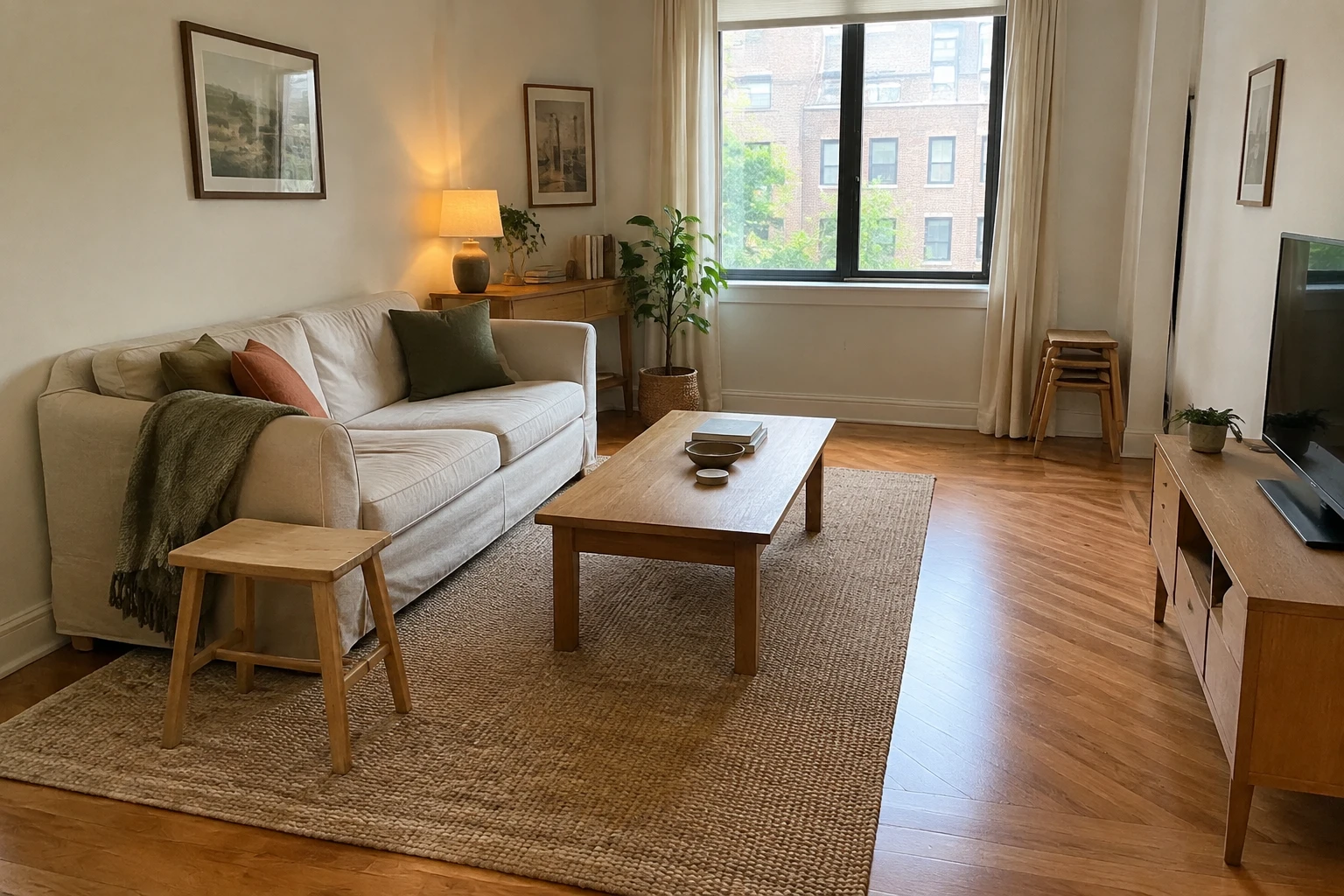
Guest seating can stay off the floor plan until someone visits. Anchor your everyday layout with a loveseat, then keep seat-rated stackable stools against a side wall for short catch-ups.
Among seating ideas for small living room spaces, this approach lets you add seats without keeping extra chairs out all week. The wooden stool pulled up near the sofa and the matching stack near the window show how the arrangement changes with company.
Copy the flexible seating rather than the room’s larger furniture footprint. Pull stools opposite your loveseat when guests arrive, and keep a framed print above the sofa as the focal point so spare furniture does not crowd the corners.
Choose stable bases and comfortable seats, with removable pads for softer texture. A woven rug and a table lamp on a slim side table add warmth alongside window light.
After visits, stack the stools away to recover floor space for stretching, play, or cleaning, and keep the exit route clear.
Choose One Layout Change for Your Room
Save the ideas that solve a problem you face each day, such as a clear walkway, a storage ottoman, or guest seats that stack away. Choose one layout improvement and support it with better reading light, a textured throw, or closed storage.
Before buying, measure furniture footprints and walking routes, including space for open doors and pulled-out chairs. Adapt the useful details to leave room for how you actually spend time at home.